How to Shoot a Train Travel Video on Your iPhone
A train ride has built-in story structure and surprising visual variety. Here's how to capture window shots, sound, and the moments people forget.
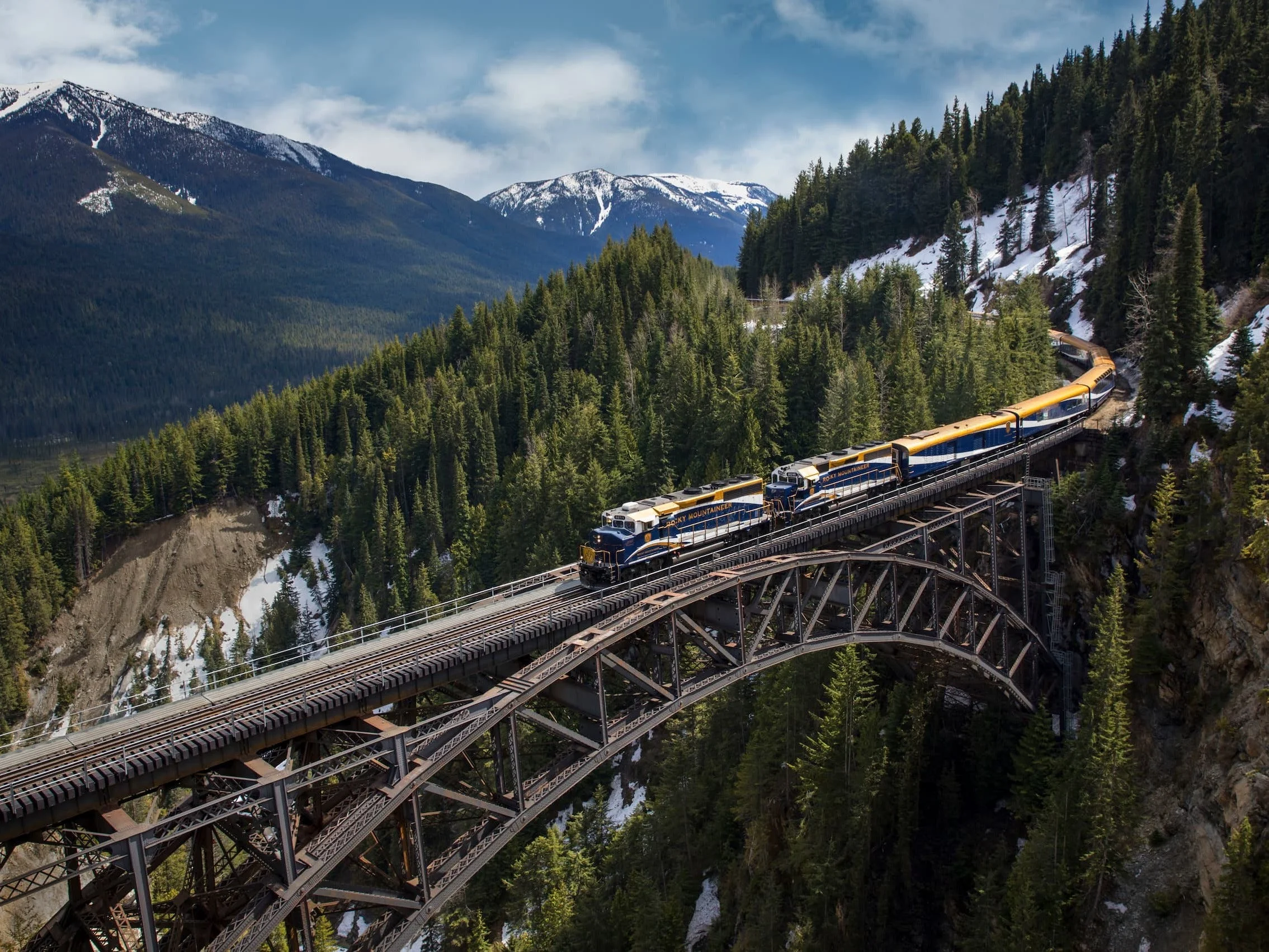
There's something about trains that makes people want to film. Maybe it's the window, a moving frame with the world scrolling past. Maybe it's the rhythm: the clatter of tracks, the sway of the car, the punctuation of stations. Whatever it is, trains are naturally cinematic in a way that planes and cars aren't.
But most train videos end up being five minutes of blurry landscape out a window. That's a missed opportunity. A train journey has a built-in story structure (departure, travel, arrival) and more visual variety than people realize.
Here's how to turn a train ride into a short video that captures the actual experience.
The Built-In Story
A train journey is one of the easiest travel experiences to structure as a video because it has natural chapters:
Departure
The station, the platform, the moment of boarding. Maybe the doors closing or the first lurch of movement. This is your opening, the "we're going somewhere" shot.
The ride
Landscapes, fellow passengers, the interior of the train, what you're doing (reading, eating, staring out the window). This is the middle, the texture of the journey.
Arrival
Pulling into the station. Doors opening. The first glimpse of a new place. Stepping onto the platform. This is your ending, the payoff.
That's a complete three-act video and you barely have to think about it. The train does the work.
Window Shots That Actually Work
Everyone shoots out the window. Most of the footage is unwatchable: blurry trees whipping past, reflections everywhere, auto-focus hunting for something to lock onto.
Here's how to get window shots that are worth keeping:
Clean the glass
Wipe the window with your sleeve before you shoot. It sounds obvious but it makes a noticeable difference, especially when light hits the glass.
Get close to the glass
Press your phone as close to the window as possible (ideally touching it) to minimize reflections. If you hold your phone a foot from the window, you'll see the entire interior of the train reflected in your footage.
Cup your hand around the lens side
Create a seal between your phone and the window with your free hand to block reflections from your side of the train. Even a partial seal helps.
Shoot distant subjects, not close ones
Close objects (trackside fences, posts, trees right next to the rails) blur into mush at speed. Distant landscapes (fields, mountains, towns on the horizon) move slowly relative to the train and look smooth and beautiful.
Use fixed focus
Tap and hold on the distant landscape to lock focus. Otherwise your phone's autofocus will constantly hunt between the glass, close objects, and the background, creating a pulsing, distracting effect.
Shoot at angles
Instead of pointing your phone straight out the side window, angle it slightly forward or backward along the direction of travel. This creates a more dynamic perspective where the landscape sweeps through the frame rather than sliding straight across it.
The Shots People Forget
The window gets all the attention. But the best train travel videos include these often-overlooked shots:
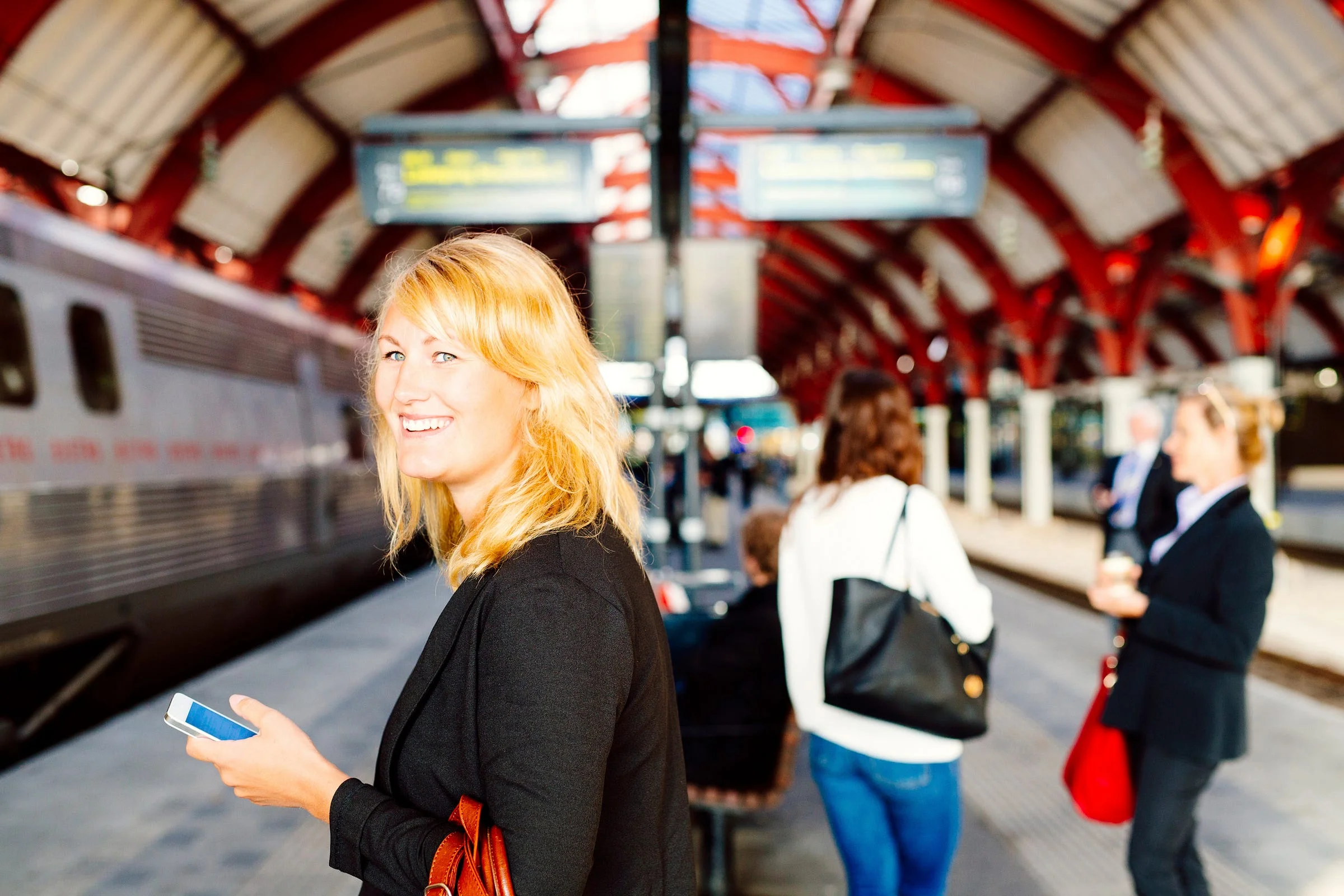
The platform before boarding
The crowd, the departure board, the train pulling in. This establishes where you are and builds anticipation. Hold your phone low and shoot the feet of people walking toward the train. It's a surprisingly cinematic angle.
Remember that you're telling a story, so you can be flexible and creative in your shooting. When your train leaves the station, you'll be shooting from the interior. With a little planning, you can remember to shoot a different (but similar) train leaving the station while you're standing on the platform (an exterior shot), that will combine well with the interior shot. You can use this trick on distant shots as well. If you see a train in the distance, shoot it, then combine with the others in your story.
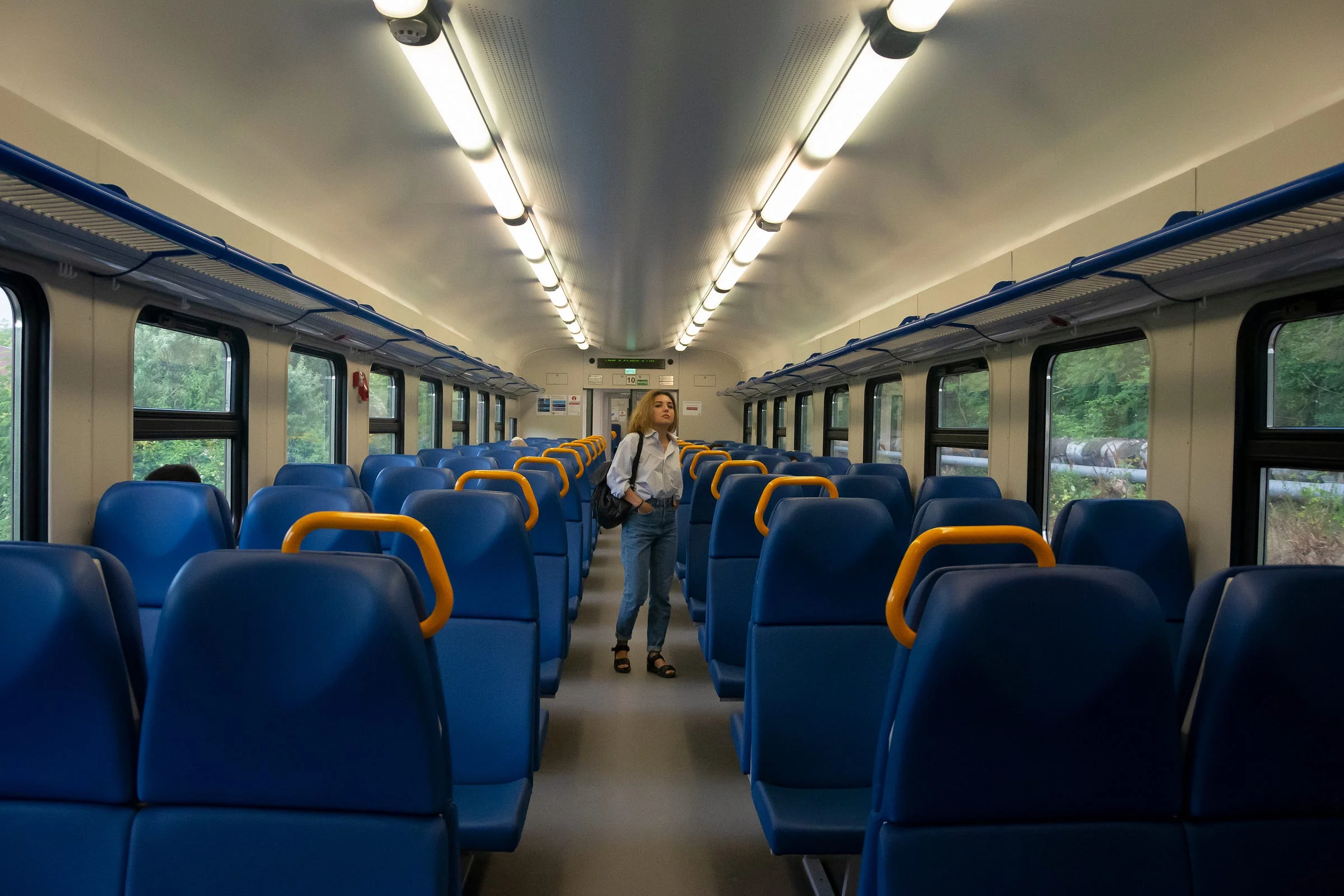
The interior
The seats, the aisle, the luggage rack, the little table. These details place the viewer on the train. Shoot the texture: the fabric of the seats, a coffee cup vibrating on the tray table, your ticket or phone showing the route.
Fellow passengers (respectfully)
The back of someone's head as they look out the window. Silhouettes against bright glass. A child pointing at something outside. People reading, sleeping, talking. Don't be invasive. Shoot from natural distances and angles that don't single anyone out. The goal is atmosphere, not portraits.
Station stops
When the train stops at intermediate stations, you get a brief window (literally) of a still world. Shoot the station name sign, people getting on and off, the platform details. These moments are natural chapter breaks in your video's rhythm.
The transition from moving to stopped
The moment the train slows into a station (the landscape decelerating, the platform sliding into frame) is a beautiful visual transition. Start recording 15 seconds before the stop.
Sound Is Everything on a Train
Train sounds are some of the richest in all of travel. Record them intentionally. They'll do half the storytelling work for you.
Sounds worth capturing:
- The rhythmic clatter of wheels on tracks (this is the defining train sound, record at least 10 seconds of it)
- The announcement: "Next stop…" in whatever language
- Doors opening and closing
- The hiss of brakes pulling into a station
- The horn or whistle
- The change in sound when entering and exiting a tunnel (the sudden muffling, then the pop back to open air)
- The quiet hum of a high-speed train at cruising speed, surprisingly meditative
Record a "sound shot"
At least once during the ride, set your phone on the tray table or armrest, point the camera at something simple (the window, your coffee, your hands), and just record for 15 to 20 seconds with no movement. Let the train's ambient sound fill the clip. This becomes the breathing room in your edit, the moment where the viewer stops watching and starts feeling the journey.
Technical Tips for a Moving Platform
Trains vibrate. They sway. They jolt. Your phone has to deal with all of this.
Brace yourself
Lean your elbow on the armrest or window ledge. Hold your phone with both hands. The less your body moves, the less the footage shakes. Even with iPhone's built-in stabilization, giving it a stable starting point makes a huge difference.
Keep clips short
5 to 10 seconds per shot. The vibration and movement of a train are charming for a few seconds and nauseating for a few minutes. Short clips also force you to be selective about what you shoot.
Shoot during smooth stretches
Trains are smoother at cruising speed and wobblier during acceleration, braking, and switches. If you feel the train gliding, that's your window for the smoothest footage.
Shoot landscape orientation
The world (and the train window) is a horizontal frame. Landscape video captures more of the passing scenery. You can always crop later to share on different social platforms.
Telling the Story of a Journey
A train video is inherently about going somewhere. Lean into that.
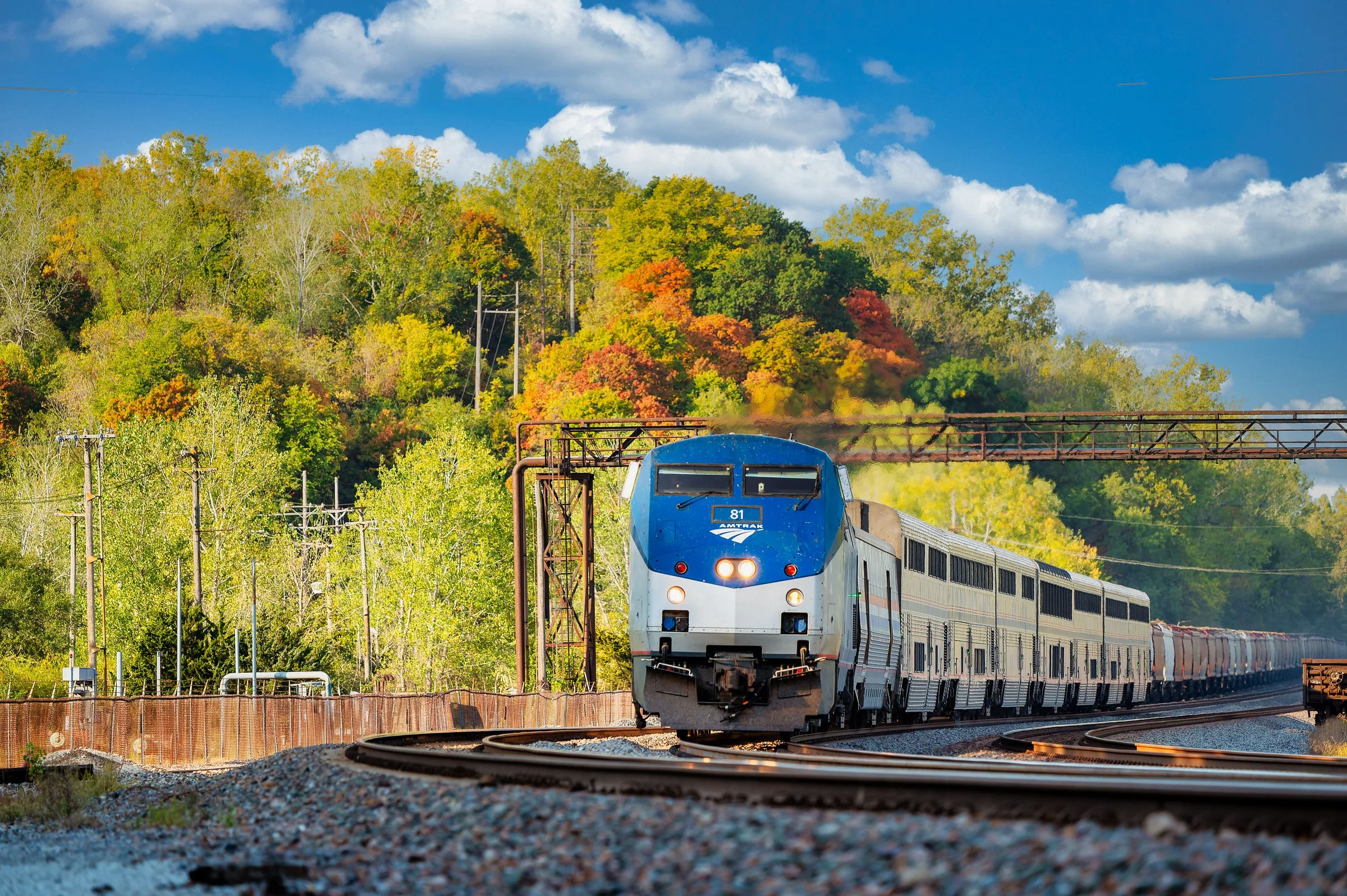
Start your video with departure cues: the station, the doors, the movement beginning. End it with arrival cues: the train slowing, the new station, the doors opening onto a different place.
In between, alternate between looking out (the world going by) and looking in (the experience of riding). This mirrors how people actually experience a train ride, glancing at the landscape, then back to their book, their coffee, their companion.
If the journey is long, show the passage of time. Changing light out the window (morning to afternoon, or daylight to dusk) is a powerful and effortless way to convey hours in seconds.
A Simple Train Video Structure
For a 45 to 75 second video:
- The station: platform, departure board, or the train arriving (1 shot)
- Boarding: stepping on, finding your seat, the doors closing (1 shot)
- Movement begins: the first lurch, the platform sliding away (1 shot)
- The ride: window, a distant landscape shot, properly focused (1 to 2 shots)
- The ride: interior, detail shots from inside the train (1 to 2 shots)
- Sound moment: a 10-second clip where the train audio takes over (1 shot)
- A station stop: the brief pause, people moving, a station name (1 shot)
- Arrival: slowing down, the new station, stepping off (1 shot)
Eight to ten clips. The train provides the rhythm. You just need to be ready for the moments that matter, and willing to put your phone down for the long stretches in between.
The best train footage comes from people who are genuinely enjoying the ride and occasionally capturing a piece of it. Not from people who film the entire journey and wonder why none of it feels special.
Last updated