NanoFlick — Shot-by-Shot Video Guide
School Science Project
Use this guide to quickly create a video for TikTok, YouTube, Instagram, etc.
🥼About This Video Story
Provide an overview of your science project: planning, process, experimental design, findings and conclusion.
How to Make a Great Video
Shoot each of the shots and keep the duration to the bare minimum. We've included instructions for each shot to create a short, fast-moving video your friends and followers will love. When you're finished shooting, just combine all the shots and you're done.
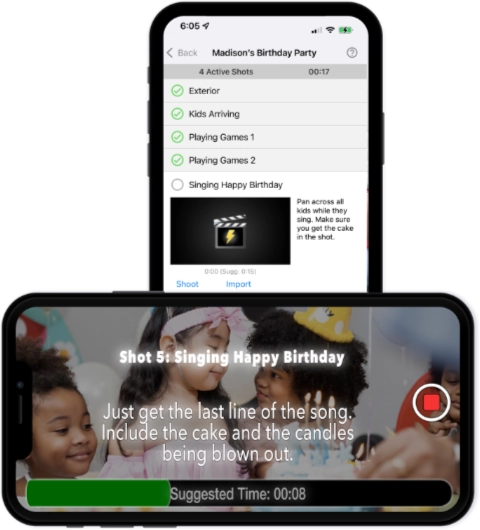
Find this template in the free NanoFlick app.
Video Shot List
ShotDescriptionLength
1
Introduce Yourself & Project
00:08In front of your school, or your project or a science setting, introduce yourself and provide the title and a BRIEF description of your project.
2
The Question
00:10Describe the question you would like to answer. What do you think the answer will be.
3
Experiment Design
00:12While shooting your materials, explain the design of your experiment. How will you measure what happens?
4
Perform The Experiment
00:10Show the experiment underway. Describe what is happening. You may add additional shots if necessary.
5
What Happened
00:12Show the results while you describe what happened during the experiment. Show the materials as well as any data and charts.
6
Findings
00:10Summarize the findings to your viewer. Have you answered your question? Was the prediction correct?
7
Discrepancies & Future Experiments
00:12Describe any discrepancies and whether you can explain them. What would a next step be? How would you revise the experiment design or what would be a suitable next experiment?
8
Summary And Sign Off
00:15Summarize the experiment and findings. Tell what you learned about science and about yourself during the process. Then thank the viewer and sign off.
Top Video Tips

Keep it short...
...then cut it even shorter. Usually under 90 seconds for a serious video; under 30 for a fun one.
Keep it moving
Make sure each shot has a point...and get to it fast! No fluff or filler.
Tell a story
Stories need structure. Make sure you've got a beginning, middle and end.

Know the audience
Family will watch a 2:00 video. Everyone else gets bored after 45 seconds.

Focus on people
Go easy on transitions, filters, etc. The best content is people relating.

Time passages
Use transitions like Dissolve or Dip-to-Black to indicate passage of time
Multiple angles
Using multiple short shots with different angles is better than one longer shot.

Start wide...
...then move closer on subsequent shot for the scene.
Video Timeline
Timeline
This story template (and hundreds more) is built into the free NanoFlick iOS app. Download now for the fastest, easiest way to get this done. It'll coach you through every shot and automatically assemble your video for instant sharing — no editing required.